
As If Somehow
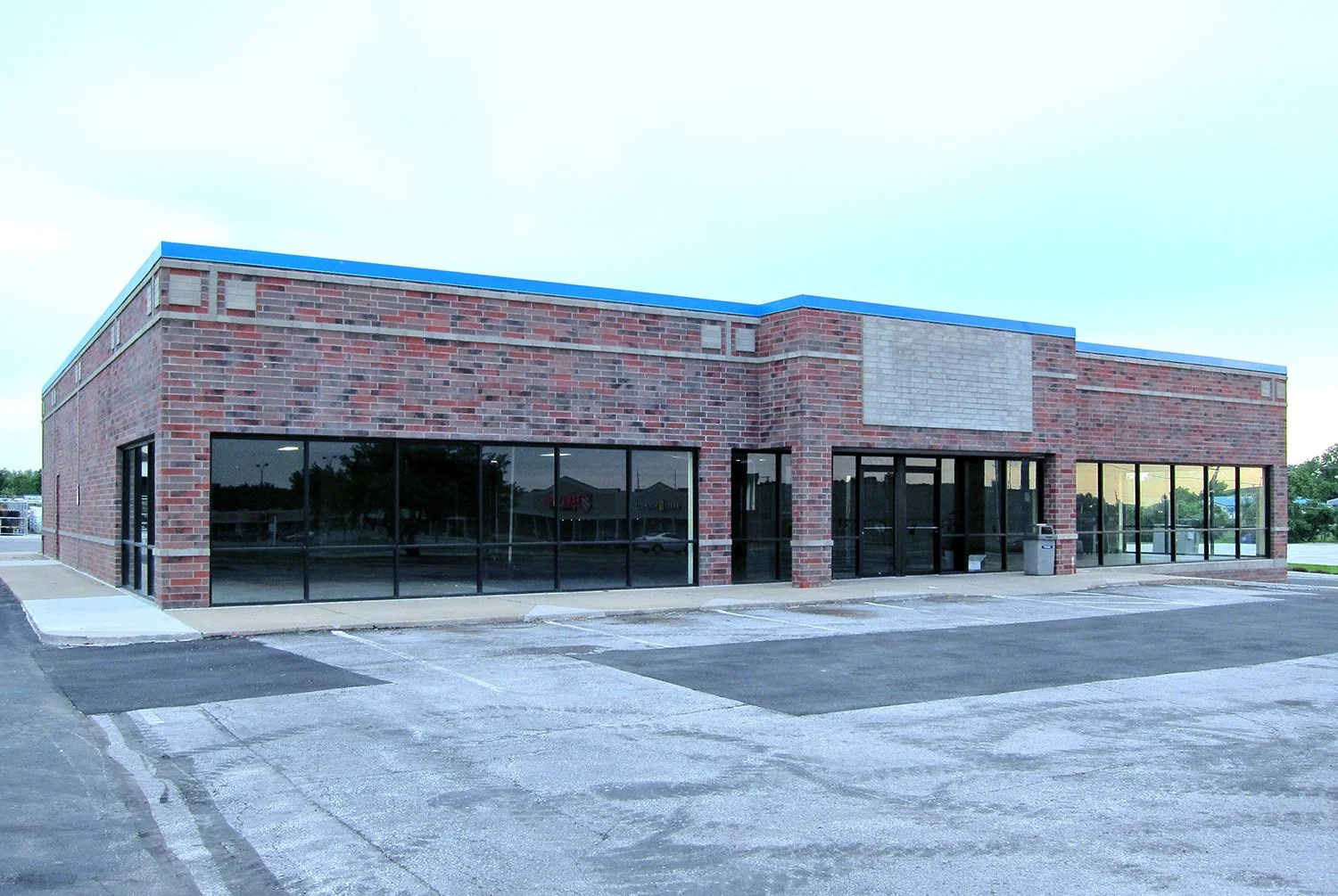
Photo by Evan Amos from Wikimedia Commons. Edited.
It’s July in south Texas and I’m here to find my son. A heavyset man ambles across the abandoned Blockbuster Video parking lot half a block west of I-35. His backpack flap hangs wide open like he’s got nothing left to lose. I stop short of him in the expansive lot. He doesn’t look up but drops a cigarette and embers skitter across the pavement. I step from the car into thick heat that steals my breath. When I get close enough to speak to him, I’m overpowered by the stench of alcohol and days-old, nicotine-saturated sweat. I say, “Excuse me, sir.”
I fall in step and ask if he’s seen my son. I show him flyers I’ve made using Xeroxed pictures—the first taken a few years ago when my son still smiled. I cropped myself out of the original selfie, the two of us sitting in the bluebonnets on the side of the road, his mop of curls blowing into his eyes, the slightest shadow of facial hair along his jawline. The second is a mugshot from earlier this year. In this, he is a young man, his dark eyes glazed over and fixed not ahead of him but within. I’m here because his grandma, my ex-mother-in-law, called me to report that after police took Michael to the ER for alcohol poisoning, he walked out against medical advice and disappeared onto the streets.
I ask again, “Have you seen my son?” holding the mugshot out to the man, I recognize with a jolt my folly in bringing the first picture at all – a mother trying to force her vision on the world. He takes it and his brown eyes meet mine.
We’ve reached the dirt median that runs along the fence separating this parking lot from a junkyard. Across from us is a concrete island with a boarded-up gas station and on the other side of that, cars stream up the access ramp to the highway.
Here on this narrow strip, a dumpster sits in the shade of a single tree, creating a dark corner. There, a soiled pillow and blanket are folded neatly. The man studies me through his unruly beard and long, tangled hair, the greys evident this close. He throws his pack down among the cigarette butts and beer cans and sits against the tree on a sofa cushion.
He says he knows my son, then says he knows me too. I take this to mean metaphorically. Until he says, “You’re Jennifer.” My knees buckle. I start to sit but stop short in an awkward crouch. My eyes settle on a toothbrush balanced across the corner of an algae-crusted cooler.
He reminds me that years ago, when my son was still in elementary school, he’d occasionally crashed on my ex-husband’s futon, in a house just two blocks away from where we stand now. That house with walls I’d painted, floors I’d mopped, the house with no bathroom door, with a hole still in the bedroom window where my ex-husband had hurled a Clearly Canadian bottle at me years before and missed. The house where I’d dreaded leaving my son every other weekend.
This man was homeless then too, a stranger, “just passing through,” that I glimpsed now and then when dropping Michael off or picking him up. He was the first of many people my ex-husband took in who just slid into the background when I showed up, waiting me out. And I was concerned these men I didn’t know, men with nowhere to be, slept in the same house as my young son, sometimes stayed with him alone. My ex-husband called it an overreaction; typical, he said. When I encouraged my son to tell me if anything happened that made him uncomfortable, he said, “Dad warned me you’d be like that.” And then he turned away.
The increasing desperation of the years in between winds around me as the heat itself. The air does not move. The flyer shakes in my hand. I gag on sobs that have burbled up unbidden all day, that drove me here from Arkansas with only hurried stops for gas and food. I’m caught between sitting and standing—my knees burn, and the pain focuses me. He reminds me, he is James.
James says my son was around earlier in the summer, but not recently. He asks if I’ve checked the Seguin Avenue bridge yet. Then he promises to spread the word on the street that I’m looking. “God,” he says, “if someone would look for me.”
I avert my eyes, embarrassed I’m not here to save him. I clutch the picture of my smiling son, and even in the shade of the gnarled live oak, my hand has sweat through it. I imagine James’ mother. I wonder when she stopped looking.
Outside the shade of this single tree, heat lines and sheer brightness render my white car all but invisible. We listen to semis barrel down the highway in the near distance. A sudden clenching in my otherwise numb calf reminds me I’m stuck in a crouch.
My emotions consolidate as I stand up. Jabs and shocks network up my legs. I slowly straighten out. I shake James’ hand. I sit in the car for a moment, shivering in the now too-cold air conditioner.
After four days of looking everywhere I can think of, I pack to leave the following morning. I make a final pass through all the same spots that night. I drive by James’ place, which I now realize is completely hidden from the road. As I climb the hill towards my ex-husband’s house, a figure comes into view. His pants are hanging off bony hips but his t-shirt fits. I can’t see his face – he’s studying the ground as he paces the driveway – but I recognize him immediately .
Without thinking I yell, “Michael!” out the window. He keeps an even pace as he navigates around a broken-down SUV that’s parked under the tilting carport, still watching his feet. He finally looks up when I swing my car as near the high curb as I dare and hop out, trudging through weeds and grass to the pocked asphalt driveway. He retreats to the stoop and watches me with a half-smile almost hidden by his hair. I swallow hard in fear of the toll his lifestyle may have taken on him.
I flash to the last Halloween before I’d left his dad, when he was five years old and stood on this same stoop. He was dressed as the padawan Obi-Wan Kenobi and posed in a perfect Jedi stance. Even so small, he swung the toy lightsaber fluidly, through the same arcs he’d seen in the movie. In a single motion, he pulled the saber through the air, over his head, and twirled it in his hand. Then he stepped forward as if to engage in battle.
“Let me take a picture of you, Michael.”
“I need my pad-wan braid,” he said as he held a pudgy little hand up. I didn’t know where the clip-on was, so he took me by the hand and led me into the house. He cut through the computer monitors his dad had stacked on the living room floor and led me to the kitchen table. There, he climbed up on a chair and gingerly pulled the braid out from under a stack of my books. I’d forgotten it was bent when we pulled it from the costume package.
“It’s flat now.” He carefully smoothed the 8-inch rope of faux hair and then handed it to me. He pointed precisely to where he wanted it clipped. We went to the bathroom mirror to check my work. As I hoisted him up to see, I buried my nose in his hair and inhaled him deeply, reveling in the joy of him. I pressed my cheek to his and felt as if nothing else mattered.
When I hug him now, I notice that his body odor is ripe, but not that of someone who’s been long without a shower in this heat, which prompts me to ask, “You’re staying here?” I glance at the house. I never know who is in that house, how high they are, or whether they’re armed.
“May as well,” he says. I tell him I’ve been looking for him for days because his grandma Shirley said he was living on the streets. He shrugs and says he knows. “I figured you’d come by here eventually.”
A tiny well of anger sparks in my gut, but I squelch it. For the past few years, he stops talking to me without warning, often mid-stream. Whether I’m expressing my love for him, enthusiastic about spending time with him, or concerned about his choices, when I allow any feeling to creep into my voice, he abruptly shuts down.
This time, I say what I’m thinking, though I concentrate on flattening my tone, “I didn’t think you’d. Be here. Again.” His father has called the police on him three times since he turned eighteen. He was arrested each time on family violence felony charges. “After the last time,” I add. My son has complained that his father threw the first punch on at least two of those occasions and each time, the District Attorney’s office declined to prosecute. Michael shrugs again. He demurs when I ask if he wants to get something to eat or take a walk. I offer to take him home with me and he looks past me.
I drive back to Arkansas the next day, heavy with the knowledge that Michael let me comb the streets for him unnecessarily, but glad to have seen him. I hang on to the feel of the hug goodbye he gave me, the “Love you too,” he mumbled as I prepared to go. Once home again, I write less often. I take to checking the Texas county records website. I keep track of his infractions; tally the nights he’s been behind bars. These are nights I know he’s eaten, that he’s been sober, that he’s slept in a bed.
____
Michael first went to live with his father full-time when he was sixteen. After a couple of weeks, his dad got tired of the truant officer coming around, so he unenrolled Michael from high school without telling him. The next day, the principal and a security entourage escorted him off the property when he showed up for class. He called me, embarrassed and livid, and ready to come home. I left within hours, driving all the way through. We talked on the phone and agreed I’d be over to get him the next morning.
I texted Michael, “I’ll be there around nine.” Out front, his dad stood smoking and watching me pull into the driveway. Michael texted that he’d be right out. His dad flicked his cigarette into the yard and went inside.
When Michael came out, he was barefoot and shirtless. His tousled hair told me he’d just gotten out of bed. “I’m just going to stay here.”
“What? Why?” I asked.
“I don’t know.”
“I can wait for you to get ready.”
“It’s fine.” His dad now stood on the stoop, arms crossed and silent. I lowered my voice, “Are you sure?”
“Yeah, I’ll just stay here. Dad … ”
“He’ll understand,” I told him. “I’ll talk to him.”
He stood up straight. “I’ll stay here.”
“Oh, Michael.” I began to cry. “I was really looking forward to having you home.” He needed to go to high school. He needed someone to cook him meals and be there when he got sick. There were no rules here, no expectations. I said, “I think you should come back with me.”
“I’ll be fine, Mom.”
My ex-husband sauntered over, taking Michael’s place by my still open car window. He said, “You should go now.”
Now weeping, I grabbed tissues from my purse. As I blew my nose, he said, “Don’t make me call the cops on you for trespassing.” He looked back at Michael briefly. Then he grinned conspiratorially, like a teenager trying to impress a friend.
“Okay.” I paused the car where the driveway met the street. I gulped for air between sobs. My ex-husband gestured to his phone, wagging his finger at me. They laughed and then Michael went inside without looking back while his father watched me drive away.
After the first family violence charge, when he was eighteen, I let Michael stay in jail for a month before driving down and posting the $2,000 bail. I then took him home with me to Arkansas, where he stayed for a year. That year was an endless cycle of making plans—from simple things like joining us for a family dinner or dentist appointments for a toothache to things I’d hoped would make lasting impacts, like counseling appointments and GED classes – but then finding he’d disappeared from the house or simply refused to go when the time came. Sometimes, he’d agreed reluctantly, but other times he’d asked for the help. At the end of that year, without telling me, he called Shirley to come get him. She took him back to Texas to live with his dad again.
The second felony violence charge was about a year after that, when he was twenty. He called, asking me to bail him out again. I told him no. When I spoke to his grandma, she agreed that he didn’t seem to learn from the first experience. She said, “I guess he’s going to have to suffer the consequences.”
A week later, though, she bailed him out and bought him a used trailer. She called to tell me she’d rented him a spot at a park off the interstate. She wanted him to stay away from his father. I wanted him to come home. But he wouldn’t speak to me for months. When he finally did, he said, “I know you told grandma Shirley not to get me out of jail.”
Every day I fought to get out of bed. I put make-up on to force myself into a routine. I registered for a class at my local community college to get out of the house and update my skills. There, I was surrounded by people his age and I saw every day just how far Michael was falling behind. That was around the time he started sending me long texts, hundreds of words long, rambling and often incoherent. What I could make sense of was filled with violent, frightening imagery. Occasionally, he answered when I called. We’d talk for a while. He swore he wasn’t doing drugs, though he often sounded high. He dismissed my concerns. I kept pressing. I begged, I offered help, please stop doing drugs. At least stick to pot. He insisted there was nothing to worry about—he was experimenting with witchcraft to relax.
I was putting clean clothes away one evening when my phone rang. Seeing the familiar area code, I answered thinking maybe Michael was calling me from a friend’s phone for some reason.
“Yes ma’am, this is Officer Munoz. I’m looking for Michael. Do you know him?”
“I’m his mom.”
“Do you know where he is?”
“No, I live two states away.”
“His trailer is on fire. Do you know if he’s in there?”
“No, I live two … ”
“We need you to tell us if he’s in there. That trailer is going to burn to the ground.”
“I don’t know.” I took a deep breath. “Is the fire department there?” I formed my sentences carefully. “Can they find out?” I saw myself from a remove. I took another deep breath.
“They’re on the way. It would be really good if you told us where he is.”
“I don’t know.”
“Are you sure?”
My voice failed me.
“Well, all right ma’am. Have a good night then.”
“What?” I began, but he’d already disconnected.
I tried Michael’s phone. It went straight to voicemail. I called his grandma.
Shirley yelled at me, drunk and angry. The police had called her too. She and her husband were hurtling down country roads to the trailer park. Their phone service cut in and out. I stood in the middle of my bedroom and listened as she cursed my son and my parenting.
“You’ve always been cold, Jennifer,” Shirley said. “I told him years ago you never loved him.”
“What?”
“When he was little. You took his Gameboy away or something and he was staying with us. He said you didn’t love him, and I told him I knew. Poor baby. It’s no wonder.” She drifted off.
I choked back my fury. I didn’t know another way to find out if Michael was okay. The growl of the lawn mower coming to life in the backyard startled me. Its steady throttle got louder before fading away as my husband went about his weekend chores. I pulled the phone from my ear and found it was hot, and slick with sweat. I stumbled towards the chair in the room, then the bed. Nothing suited me. Finally, I leaned against the wall and eased myself down until I was sitting cross-legged on the bedroom floor. Then switching to the speakerphone, I laid it next to me before bending forward to rest my forehead on the carpeted floor. The garbled voices of Shirley and her husband came across the speaker as they spoke to one another. Soon, the road sounds evened out. They must’ve made it into town.
“We’re here.” Shirley came back on, but when they got out of their truck, she put her hand over the phone. It hardly muffled her loud insistence that my son set the fire deliberately. To me she said, “He left the window open and candles burning. The whole thing is gone.” I heard her pull in a deep lungful of cigarette smoke. She coughed and then said to her husband, “Dammit, Bobby, hold this.”
I was less concerned about the already rotting pop-up she’d bought than his computer, his pictures, his clothes, and every other thing he valued in the world. “It’s that damn witchcraft, you know,” she said. She paused to take a drink. “Or he did it on purpose.”
“Has anyone seen him?” I asked.
She was silent long enough that I thought she’d forgotten I was there. But she abruptly yelled out, “Michael!” then to me, “He’s coming out of the woods.” Then, the staticky sound of the phone being fumbled. I listened from six hundred miles away as she rushed at him screaming about arson.
An authoritative male voice asked, “Are you hurt?” and Michael said, “Not … no.” Then Shirley, “… the hell … wrong with you? You … stupid. Are you drunk? Or high?” The reception cleared as she said, “You’re drunk!” I imagined her pointing a finger at him. After a brief silence, Michael said, “Maybe. Aren’t you?” A second deep masculine voice ordered Shirley’s husband to hold her back.
After a moment, she spoke to me again, “The firemen are asking him about it. He just told the cop his phone was in the trailer.”
“Can I talk to him a minute?” I asked.
“That damn trailer was expensive, Jennifer. I am so pissed off.”
I started to respond, but she cut me off, said “I’ll take care of it” and hung up.
She didn’t return my calls.
I’ve had no other way but by mail to reach Michael since the fire, as he pawns every phone I buy him. Years are passing and I should be doing something with my life. I apply for jobs. Michael goes in and out of jail. A drug charge here, a public intoxication charge there. I consider graduate school, but I don’t follow through. I rent a PO Box to avoid using my home address on letters to the jail, checking it weekly in the hope he’s written me back. There’s never more than a brightly colored card touting a local business or sheets of coupons for Subway and Papa Johns. I visit less often since Michael let me search for him for days, but sometimes when I know he’s not in jail I still make the trip just hoping to see him.
I always start at his father’s house now. I see James there once, standing out front with my ex-husband. He doesn’t step back into the shadows. Instead, he says, “Hey.”
“How’re you, James?”
“Can’t complain."
And when I leave that day without seeing Michael, I tell James to take it easy. He replies, “If it’s easy, take it,” and grins.
As I stand on the front stoop during what turns out to be the last of these visits, I glance down. My latest letter, announcing my intention to come and breaking the news of my mother’s death, lies crumpled and unopened among shards of dark glass and a raft of fast-food bags matted together with decay. I squat, balance carefully, and excise it from the rancid mess. I knock, then quickly step back from the door. I shout my name, identifying myself for the occupants who mutter to one another as furniture scrapes across the floor.
The door cracks open. A weathered face I don’t recognize leans out. Cigarette and pot smoke billow out of the darkness in near plumes. The face asks, “What do you want?” I tell him I’m there to see my son.
“You Mike’s mom?” He pushes the door open a little wider. In the shaft of natural light, it is clear he is sitting down and has twisted around to talk to me. “He ain’t here but you can wait if you want.” He scoots his chair out of the way and stands up to get the door for me. Inside, I turn to face him in the darkness. There are blankets over the windows. I can see only about a three-foot radius. I ask for my ex-husband.
“Son of a bitch ain’t been around for weeks.”
For a moment, I’m silent. On the wall next to the front door still hanging in the frames I bought twenty years earlier are photographs of me. Some are me with Michael. Some are just me. I ask, “Do you know when Michael was here last?”
From the depths of the house a woman says, “Last month.” A deeper voice says, “At least a couple weeks.”
“Guess you still look about the same.” The doorman says when he notices me studying the pictures, “You smoke?”
I wave off the small metal pipe he holds out to me. “Nah. I’m meeting a friend in a minute. I better go.”
He sits back down. “You can let yourself out.”
My hand is already on the doorknob. “Tell him I came by when you see him, please.”
“Yep,” he says as I shut the door behind me.
When I drop by the next day, Michael is sitting on the stoop. We go for a walk. He laughs a little when I tell him about the day before. I don’t mention the pictures.
He stops talking after I ask what he’s been doing lately. When we return to his dad’s, he silently hugs me before he goes inside, shutting the door behind him. I never get to tell him my mom died.
In January 2020, I mail Michael a card for his twenty-fifth birthday. I get no response. I’m saddened to realize I don’t expect one. By February, I’m watching the world drown in a virus. The county website shows a new warrant issued for Michael: failure to appear. I check the site at least weekly after that.
He’s picked up in late March. I wait and pray and watch the coronavirus numbers with everyone else. Once a positive case shows up in a locked facility, the disease runs through the inmates almost unchecked. I track statistics for Texas as closely as those for Arkansas.
I give Michael a couple of weeks to sober up before I write him, hopeful just knowing he’ll be sure to receive it. I tell him how much I love him. I ask him to come home when he gets out.
This letter feels like a last chance, for connection, salvation, hope. I realize the toll the years are taking on me, the exhaustion when a new acquaintance asks if I have kids, where does he live, what does he do? Nonetheless, I mentally prepare to drive that ten-hour trip again, down a swath of the country refusing to take precautions against this new disease and mocking those who do. I steel myself to walk into the frigid jail, to greet the hard secretary. I allow myself to look forward to seeing my son, even if only for a few minutes, through a glass divide, in a jumpsuit.
After three weeks, I’m finally out of the house again and I check my box. I turn the key and see an envelope—not the usual ads. My heart leaps. I shift to “we can figure this out together” mode before I can stop myself.
But large red letters read, “RETURN TO SENDER.” And, “Inmate Refused” is stamped over my own handwriting.
In the months that follow, I think surely this is where I’ll give up. Sometimes I think of James and wonder what complicated history lies behind his certainty that no one is searching for him. Maybe his mom doesn’t care, or maybe she’s just spent.
I keep two pictures next to the TV. One of Michael as a toddler, gleefully wearing an empty baby wipes box on his head and the one of us sitting in the bluebonnets. I allow myself to remember the good. I’m stuck at home alone most of the time, my husband being an ‘essential worker,’ and I spend my days playing a golf game on my phone. It’s all I can do – drag my finger down the screen, gently release pressure, watch the white circle fly through the air and bounce across the perfect green, again and again and again.
In every conversation, in every dream, I see my son. I see him sick. I see him saying something stupid, offhand, too smart. I see the reactions of heartless jailers and hard men. I see him alone. My heart cries out, but when I listen to it, when I give it voice, I am broken. So, I turn to my phone again, pull the ball back and release it, furious and distraught when it flies wide or falls short, as if somehow I’m really in control.
As if somehow I could do better.
Jennifer Eden Rogers is a writer and behavioral health advocate who integrates her professional background in community mental health with personal experience to inform her work. She is currently completing an MPH in policy and management. Her book-length memoir project illuminates the profound structural and personal complexities that emerge at the intersection of caregiving, medical advocacy, and systemic erasure.